Opening Reflection
In a football match, reality is always one step ahead of the gaze.
Millions of stimuli emerge and dissolve in front of the player’s eyes: teammates, opponents, spaces, trajectories, risk, emotion, timing… and everything happens at the same time.
The brain, due to a structural limitation, cannot process everything. It is forced to filter, prioritise and convert only a minimal part of that chaos into useful information for decision-making.
That is where the difference appears.
Many footballers see.
Others observe.
And this invisible nuance separates the reactive player from the intelligent player
Seeing vs observing: image vs understanding
Seeing is a sensory act.
Information enters through the eyes, but there is no guarantee that it will turn into understanding. It is a passive gaze: the player registers images, but the brain may not integrate, relate or give them meaning within the context of the game.
Observing, on the other hand, is a cognitive act.
It involves selective attention, sustained attention and interpretation. It is looking with intention: deciding which stimuli deserve to be processed, integrating dispersed signals and anticipating what is about to happen.
In Smartfootball terms:
- Seeing feeds the retina.
- Observing builds the neural network.
That is why a player can have the stimulus right in front of them… and still “not see it”.
Not because their eyes fail, but because their brain did not prioritise, did not interpret it and therefore did not transform it into an effective decision.
Seeing captures images.
Observing builds meaning.
Selective attention: the filter that creates intelligence
The environment offers far more information than the brain can manage. The difference is not in perceiving more stimuli, but in choosing which ones are most relevant at each moment.
This selection process acts as a cognitive filter that determines which information is processed and which is discarded. The quality of this filter largely determines the player’s intelligence.
A player who observes well reduces uncertainty because they detect emerging relevant signals in the environment earlier.
They do not react to the game.
They get ahead of it.
Heraclitus of Ephesus (6th century BC) stated:
“If you do not expect the unexpected, you will not recognise it when it arrives.”
In football, as in life, the unexpected is not an exception: it is the norm. Matches do not follow a script. The game is uncertain, changing and chaotic.
Therefore, during competition, the brain cannot limit itself to responding to what is already happening. It needs to activate its predictive system and continuously prepare for what may happen.
That is where the difference between a reactive player and an anticipatory player is established.
That is why the key question is not:
What should I do?
but rather:
What should I observe in order to decide earlier and better?
The unexpected cannot be recognised if attention is not prepared to detect it.
Only those who remain connected to the environment—reading signals, anticipating changes and preparing responses before events manifest—can act with an advantage when the game becomes disordered.

Vigilant and sustained attention
Selecting well and anticipating is not enough if the player disconnects from the game. In football, decisive moments do not announce themselves and can appear at any time; therefore, attention cannot be intermittent.
Vigilant attention—also known as sustained attention—is the ability to maintain cognitive connection with the environment over long periods, even when nothing obvious is happening. This state of calm alertness, without anxiety, allows the player to stay connected to the play even with fatigue, monotony or distractions.
The game needs players who are sensitive to the environment: footballers who not only know how to observe, but who feel comfortable in a state of active attention, prepared to recognise the unexpected when it appears.
When the origin of the error comes before the action
Execution is the final element of the decision-making process. Before it, the player has had to decode the environment and make a decision.
But when the attentional system is not well built, decisions are not only delayed; they are constructed on low-quality information. And when information is deficient, execution deteriorates.
Then the error appears in the form of an imprecise action or ineffective execution, and it is often interpreted as a technical problem.
When a coach observes “a bad pass” and corrects only the execution, they are acting on the symptom, not on the origin.
If the goal is to develop intelligent players, the question should not be how to correct the error, but what happened before it.
Key questions:
- What did the player not see?
- Which signal went unnoticed?
- What risk was not interpreted?
- What advantage was not recognised?
And the question that redefines the coach’s role:
What kind of experiences am I designing so that the player learns to observe, filter and decide better before executing?
As coaches, the challenge is not to correct what is visible, but to understand its invisible cause and act upon it.
Training without attentional demand and demanding fast reading in matches
When training is simplified excessively, cognitive demand is reduced. And when that happens, the player’s brain stops practising what is essential: reading changing environments, prioritising information under pressure and sustaining attention in uncertainty.
The player may execute “well” in controlled tasks, but in competition their attentional system becomes overloaded and their decisions—and with them the action—lose quality.
If we want to develop players capable of anticipating and understanding the game, we need to expose them to contexts that demand it:
- Multiple attentional foci
- Dynamic and changing environments
- Interference and ambiguity
- Experiences that require observing, interpreting, anticipating and deciding at the same time
Because intelligence and creativity are directly related to the development of a rich, active and adaptive perceptual capacity.
Final reflection
Observing better is not a talent.
It is a trainable capacity.
When the coach assumes their role as a designer of rich and meaningful environments, when they interact with the player by making them think and asking perceptual questions, they are educating the player’s attentional system.
And when the brain learns to observe, everything changes: game reading, anticipation, decision-making and, ultimately, execution.
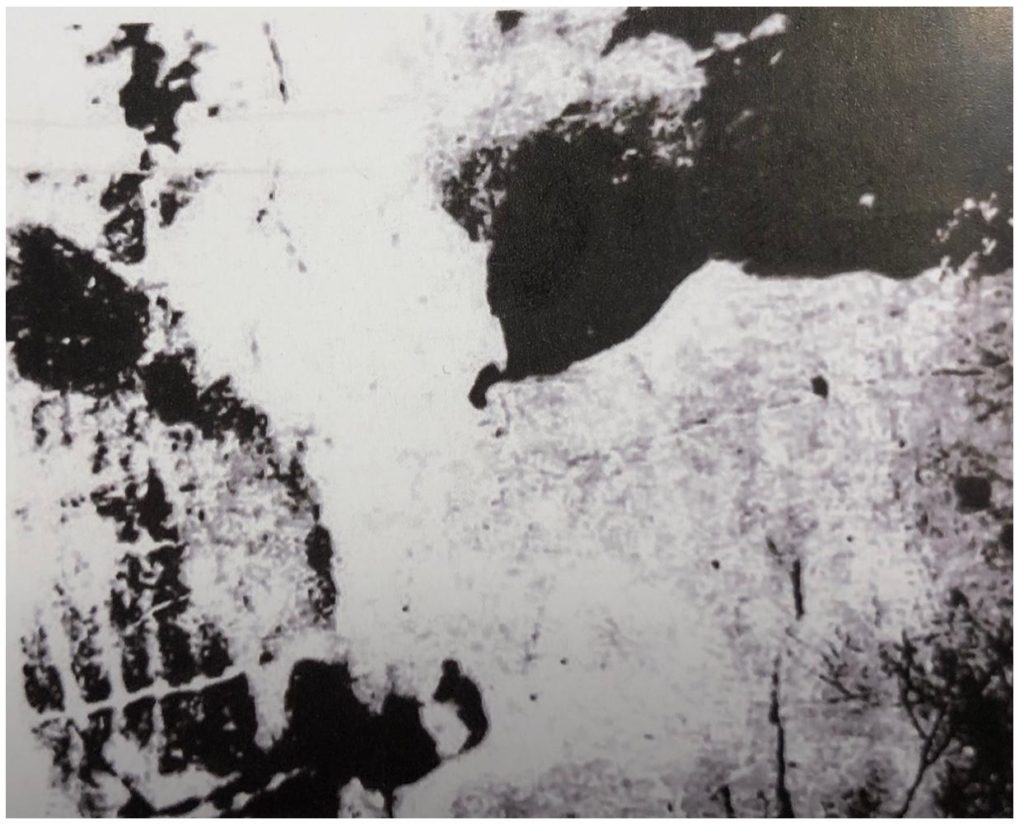
¿Do you remember this image? ¿What do you see now?
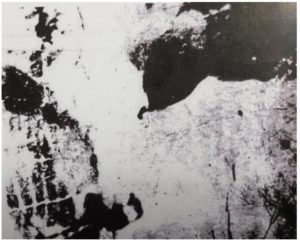
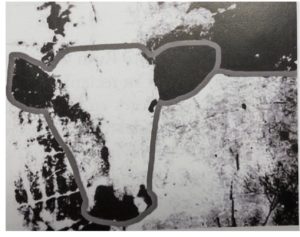
Dallenbach, K. (1951). A puzzle-picture with a new principle of organization. American Journal of Psychology.
FAQ
The key lies in accepting a pedagogical truth that reshapes the approach: the coach cannot—and should not—correct every individual decision in real time.
When correcting observational errors, we cannot constantly stop the game. We must acknowledge how difficult it is to guess what each player was observing in every action. That is impossible and, moreover, counterproductive for learning.
The shift occurs when the coach stops trying to control every response and starts thinking on two key levels:
coach–player interaction (what the coach reflects on with the players) and the training environment (what needs to be modified to provoke better game reading).
What does this mean in practice?
Not correcting isolated actions, but repeated patterns
The coach does not intervene because of a single mistake, but when clear tendencies appear: repeated late readings, the same decisions under similar stimuli, the same errors against the same type of pressure. This is not randomness; it indicates a perceptual system that is not yet well calibrated.
Correcting the environment, not the play
If a player fails to detect what is relevant, it is usually not because they “do not want to”, but because the environment does not require them to observe better.
Real correction does not mean “giving the solution”, but adjusting the task:
- changing spaces,
- altering player relationships,
- introducing new interferences,
- adjusting time constraints and advantages.
Using brief questions that guide attention
There is no need to stop playing frequently.
Sometimes a short question during a natural pause is enough:
- What made you choose that option?
- What happened behind you before receiving?
- What signal did the opponent give you?
Well-formulated questions:
- activates reflection
- help the player discover patterns by themselves.
It is not about talking more, but about asking better questions.
Silence also educates: it allows the player to listen to the environment instead of constantly depending on external instruction.
When we understand that errors are not failures to eliminate but information to interpret, the coach’s question shifts from “How do I stop them from making mistakes?” to “What is this error showing me about how the player observes, interprets and decides?”
An error often reveals:
- a signal the player did not detect,
- relevant information they failed to prioritise,
- an incomplete contextual reading,
- or an anticipation poorly adjusted to the environment.
When the coach learns to read errors as messages, they stop acting on the symptom and begin working on the root cause.
The error then becomes a diagnostic tool that guides the design of new learning experiences, more precise and more effective.
Because the visible error is misleading.
The coach sees a poor first touch or an inaccurate pass and automatically interprets it as a technical deficit. The habitual response is to add more technical drills to “fix” the problem. However, in many cases, technique does not fail due to lack of ability, but because the player has misread the environment before acting.
In this context, no analytical exercise will solve the issue, because it trains the movement without the information that generates it in the game. The movement improves, but not the process that triggers it.
Technique should not be trained as an end in itself, but as the natural consequence of good game reading.
Yes.
And in fact, it is the only way technique truly improves.
Technique does not improve when isolated from observation; it improves when trained together with the information that provokes it.
Technique is not an isolated gesture.
It is a motor response to a perceived problem.
If the problem is misinterpreted, the response—no matter how rehearsed—will be fragile.
Therefore, integrating technique and observation does not mean:
- making technical drills “slightly harder”,
- or adding perceptual cues to analytical tasks.
It means designing game-based situations where technique can only emerge if the player observes well:
- if they do not look, they arrive late;
- if they do not interpret, they choose poorly;
- if they do not anticipate, execution becomes forced.
In those contexts, technique self-adjusts because the brain receives the right information at the right moment.
By reducing structural complexity while maintaining perceptual richness.
Fewer players, fewer rigid rules, more contextual meaning.
The problem is not age.
The problem is believing that observation is too complex to be learned from the beginning.
Perception is educated early, just like game understanding.
The key is not what the player does, but what they must perceive in order to do it.
If a task works the same even when the player does not observe, interpret or anticipate, it is probably not training observation.
A clear sign is this: when a task becomes mechanical, observation is no longer required.
Tasks that educate perception lose meaning once they are automated without reading the environment.
No. The change is not radical; it is progressive and conscious.
It is not about eliminating existing tasks, but about reviewing their cognitive impact:
- What must the player observe here?
- Which environmental signals are relevant?
- Does the task allow multiple solutions or only one correct answer?
Small adjustments in rules, spaces, timing or roles can produce major changes in how the player thinks and decides.
By using open problems.
Observation is activated when the player needs environmental information to solve the task, not when they are explicitly told where to look.
The coach should not direct the player’s gaze, but create contexts that demand it.
Later, intervention comes during the reflective pause, in the form of questions, not solutions.
Yes, if it is poorly designed.
That is why the goal should not be to “make things more complex”, but to adjust perceptual difficulty to the player’s developmental stage.
Observation develops when:
- the environment challenges without overwhelming,
- it requires thinking without generating anxiety,
- and allows mistakes without immediate punishment.
Error is not a sign of failure; it indicates that the brain is working.
It changes completely.
Evaluation no longer centres only on the final result, but on the quality of the perceptual–decisional process.
Two players can fail the same action for very different cognitive reasons.
Understanding what they saw, how they interpreted it and why they decided adds far more value than judging the gesture alone.
Yes, as long as the club is clear about what it is developing.
Pressure does not disappear, but it is managed better when the player understands the game.
In the medium term, teams that observe better also decide better under pressure, because they do not rely on impulse or chance.
Their relationship with the game changes:
- They stop reacting and start anticipating.
- They stop executing orders and start interpreting situations.
- They stop depending on the coach and start thinking within the game.
They gain autonomy, coherence and understanding.
It is not difficult, but it requires conviction and coherence.
The immediate goal is not to eliminate analytical tasks, but to help coaches understand the cognitive impact of each type of task.
The real change is not only methodological; it is cultural. Coaches need to understand the why and, above all, believe in it. Without conviction, there is no sustainable change.
Not only what went well or badly, but:
- What did my players have to observe today?
- Which environmental signals were key?
- How many real decisions did they have to make?
If there was no need to look, interpret or decide, there was no deep learning.
When error stops being an annoyance and becomes valuable information.
When mistakes no longer trigger the urge to correct, but the curiosity to understand.
At that point, the coach stops reacting to error and starts interpreting it.
And then something meaningful happens: you see a player make a mistake and you no longer think “not again”, but:
“You are making better mistakes. You are about to stop making them.”
That is where the true path of the coach begins.